Engineering Solutions for Dust-Free Lighting Assembly Environments
Automotive lighting systems demand extremely high levels of cleanliness during production. Modern headlamps contain precision optical components, advanced coatings, LED modules, and decorative surfaces that can be easily affected by even microscopic dust particles. A single contaminant trapped inside a lamp assembly can reduce optical performance, create cosmetic defects, or lead to customer complaints. For this reason, engineering dust-free assembly environments has become a critical requirement in automotive lighting manufacturing. The foundation of a dust-free assembly environment begins with cleanroom-oriented facility design. Sensitive production areas are typically separated from general manufacturing zones to minimize contamination risks. Positive air pressure systems are commonly used so that filtered air continuously flows outward, preventing external particles from entering the assembly area. This controlled airflow creates a stable environment where airborne contamination is significantly reduced.
Air filtration systems are one of the most important engineering solutions for maintaining cleanliness. High-efficiency particulate air (HEPA) filters remove extremely small particles from circulating air before it reaches production zones. In some advanced assembly environments, ultra-low particulate air (ULPA) filtration may also be used for even higher cleanliness standards. Carefully engineered airflow patterns ensure that dust particles are carried away from critical workstations rather than settling on optical surfaces. Temperature and humidity control also contribute to contamination prevention. Stable environmental conditions reduce static electricity, which can attract dust to plastic lenses and other optical components. Anti-static flooring, grounded equipment, and ionizing systems are often integrated into production areas to minimize electrostatic attraction and improve overall cleanliness performance.
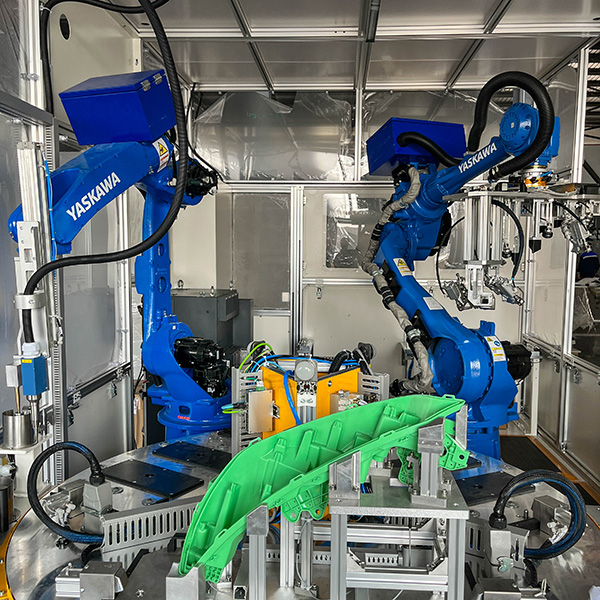
Automation plays a major role in reducing contamination risks. Manual handling increases the chance of introducing fibers, fingerprints, or airborne particles into the assembly process. Robotic handling systems provide controlled and repeatable movement of sensitive components while reducing direct human contact. Automated transfer systems further help maintain environmental stability by limiting unnecessary movement within clean zones. Equipment design itself must also support clean production. Machines used in optical assembly environments are engineered with smooth surfaces, enclosed mechanisms, and low-particle materials that minimize dust generation. Lubricants, moving components, and conveyor systems are selected carefully to avoid producing contaminants during operation. Compact and enclosed equipment layouts also help reduce airflow disturbance around critical assembly stations.
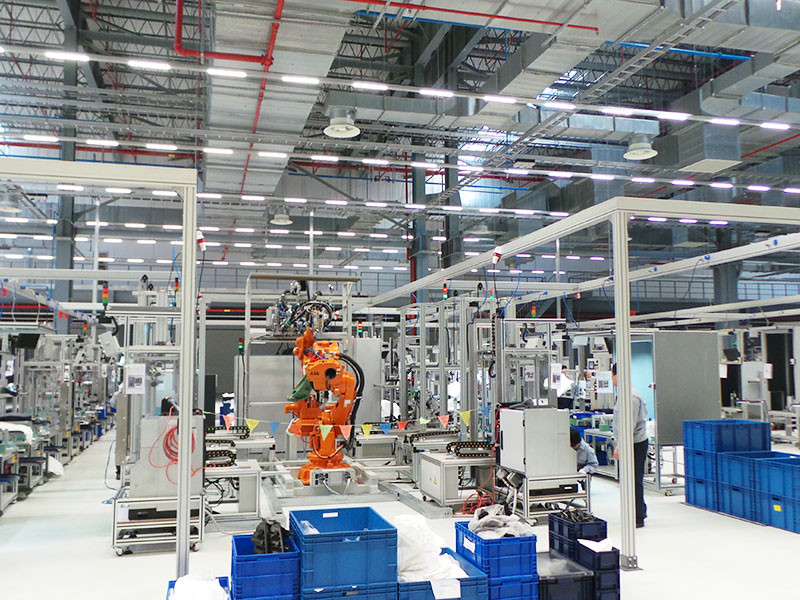
Personnel control is another important aspect of dust-free manufacturing. Operators working in clean assembly areas typically wear anti-static garments, gloves, masks, and protective head coverings. Entry procedures may include air showers or contamination removal systems to reduce particles carried into the production environment. Proper training ensures that employees understand cleanliness protocols and handling procedures for optical components. Dust control becomes especially critical during coating and sealing processes. UV coatings, anti-fog treatments, and optical adhesives require perfectly clean surfaces to achieve proper adhesion and optical clarity. Even tiny particles trapped during coating application or sealing can create visible defects or reduce product durability. Enclosed coating systems and controlled dispensing stations help protect components during these sensitive operations.
Inspection systems are integrated throughout the production line to monitor cleanliness and detect contamination early. High-resolution vision systems can identify particles, scratches, or surface defects before final assembly. Inline inspection helps prevent defective components from progressing further through the manufacturing process, reducing scrap and improving overall quality consistency. Environmental monitoring systems provide real-time control of production conditions. Sensors continuously track airborne particle levels, airflow velocity, temperature, and humidity within clean assembly zones. If environmental conditions move outside acceptable ranges, corrective actions can be taken immediately to maintain process stability and product quality.
As automotive lighting systems become more advanced and visually refined, the importance of dust-free assembly environments continues to grow. Precision optics, adaptive lighting systems, and decorative lighting elements all require extremely clean manufacturing conditions to perform correctly and maintain premium appearance standards.