What OEMs Expect from a Lighting Production Equipment Partner
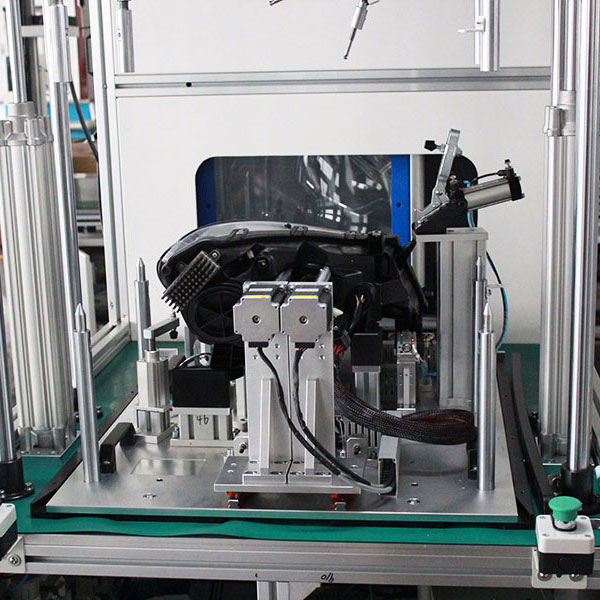
Automotive OEMs operate in one of the most demanding manufacturing environments in the world. Tight launch schedules, strict regulatory standards, cost pressure, and zero-defect expectations define every new vehicle program. When selecting a lighting production equipment partner, OEMs are not simply purchasing machines—they are choosing a long-term collaborator capable of supporting product development, mass production, and continuous improvement. Their expectations extend far beyond basic equipment supply. First and foremost, OEMs expect technical competence and industry specialization. Automotive lighting is a precision-driven sector involving optics, electronics, sealing systems, and decorative finishes. Equipment partners must understand projector lens alignment, photo-metrics requirements, UV coating behavior, adhesive dispensing accuracy, and assembly tolerances. A supplier without deep knowledge of lighting applications cannot anticipate challenges or provide optimized solutions.
Reliability and quality consistency are equally critical. OEMs design production plans around stable output. Equipment must deliver repeatable performance across high-volume cycles without frequent downtime or parameter drift. Robust mechanical design, high-grade components, and validated process control systems are expected as standard. Machines should be capable of operating continuously while maintaining precision in positioning, curing energy, dispensing volume, and inspection accuracy. Customization capability is another key requirement. Vehicle platforms vary significantly in lamp design, size, and functionality. OEMs expect equipment partners to tailor assembly lines, coating systems, or testing stations to match specific program requirements. Modular configurations, flexible tooling, and programmable systems allow quick adaptation to new models without excessive re-engineering. The ability to support multi-model production is a major advantage.
Strong engineering support throughout the project life cycle is also essential. From early concept discussions to pilot runs and full-scale production, OEMs expect active collaboration. Equipment partners should provide design feedback, suggest manufacture ability improvements, and participate in process validation. This proactive involvement reduces development risks and shortens time-to-market, which is vital in competitive automotive programs. Compliance and documentation are non-negotiable. Automotive production must align with global standards such as ISO quality systems and specific regulatory requirements for lighting products. Equipment suppliers must provide comprehensive technical documentation, validation reports, and traceability systems. Digital integration with manufacturing execution systems is increasingly expected, enabling real-time data monitoring and quality tracking.
After-sales service and long-term partnership mindset are equally important. OEMs prefer partners who offer prompt technical support, spare parts availability, remote diagnostics, and on-site assistance when required. Lighting production equipment represents a significant investment, and its performance over years of operation directly affects overall plant efficiency. A responsive support structure builds confidence and minimizes operational risks. Innovation capability is another expectation in today’s evolving industry. With the growth of LED, matrix, and adaptive lighting technologies—especially in electric vehicles—OEMs need equipment partners who can evolve alongside new design trends. Investment in smart manufacturing, automation, AI-based inspection, and energy-efficient systems demonstrates readiness for future programs.
Cost competitiveness matters, but not at the expense of quality. OEMs evaluate total cost of ownership rather than purchase price alone. Energy efficiency, low maintenance requirements, reduced scrap rates, and long equipment lifespan contribute to sustainable cost performance. Equipment that improves yield and reduces rework ultimately delivers greater value. Communication transparency and project management discipline round out OEM expectations. Clear timelines, milestone tracking, risk assessment, and consistent reporting build trust during program execution. Delays or miscommunication can disrupt vehicle launch schedules, so equipment partners must demonstrate strong organizational capability.
Ultimately, OEMs expect a lighting production equipment partner to function as an extension of their own engineering and manufacturing teams. Technical expertise, reliability, customization, service commitment, and innovation capacity define a successful partnership. In a high-stakes automotive environment, the right equipment partner contributes not just to production efficiency, but to long-term brand reputation and market success.