Managing Vibration Impact in Automotive Lighting Production
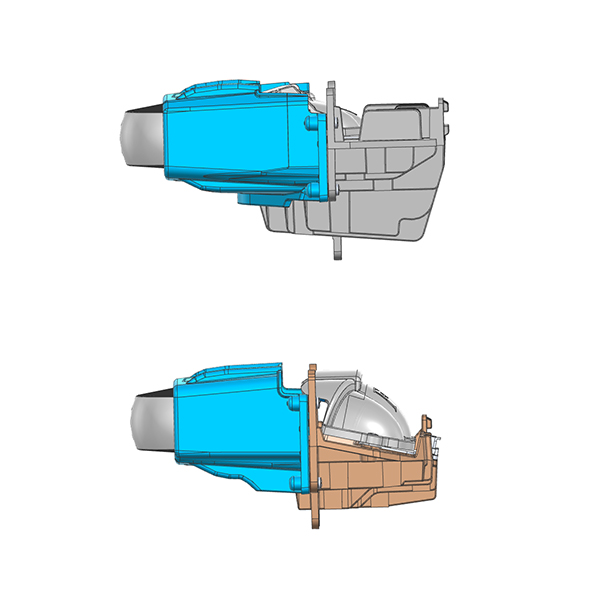
Vibration is an often-overlooked factor in automotive lighting production, yet it has a direct impact on product quality, assembly precision, and long-term performance. From high-speed assembly lines to transportation and real-world vehicle operation, lighting components are constantly exposed to mechanical vibrations. Managing these effects during manufacturing is essential to ensure that headlamps and other lighting systems meet strict OEM standards for durability and optical accuracy. One of the primary concerns with vibration in production is its influence on precision assembly. Automotive lighting systems, especially those using projector lenses and LED modules, require extremely accurate alignment. Even slight movement or instability during assembly can shift component positioning, leading to beam distortion or misalignment. To address this, production equipment must be designed with rigid structures, vibration-damping materials, and stable mounting systems that minimize unwanted motion.
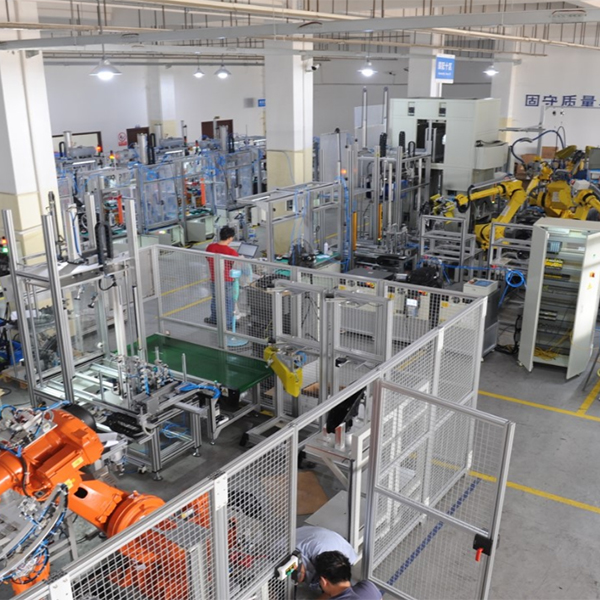
Robotic and automated systems must also be carefully engineered to control vibration. High-speed robotic arms and conveyors can introduce dynamic forces that affect positioning accuracy. Advanced motion control systems, including servo motors with smooth acceleration and deceleration profiles, help reduce sudden movements. By optimizing motion paths and reducing mechanical shocks, manufacturers can maintain consistent assembly precision across high production volumes. Tooling design plays a crucial role in vibration management. Fixtures and holding devices must securely position components without introducing stress or deformation. Poorly designed fixtures may allow micro-movements during processing, especially in operations such as adhesive dispensing or lens placement. Precision fixtures with proper clamping force and damping features ensure that parts remain stable throughout each manufacturing step.
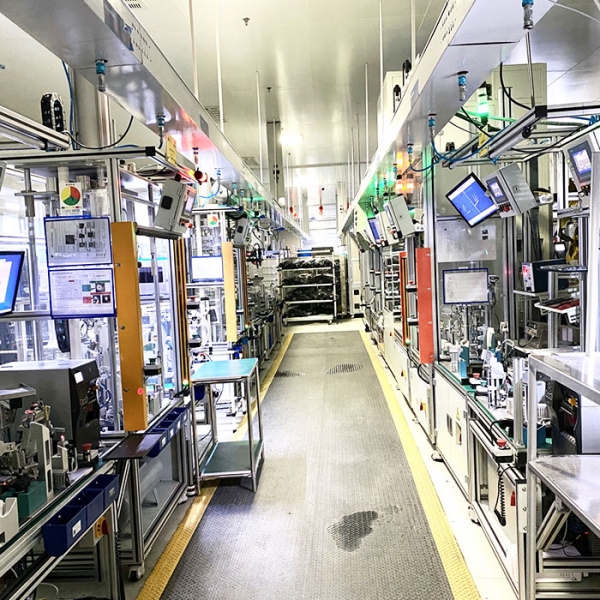
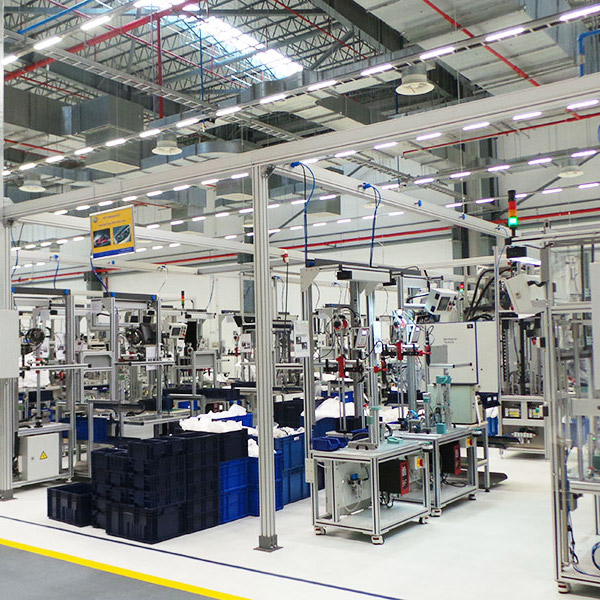
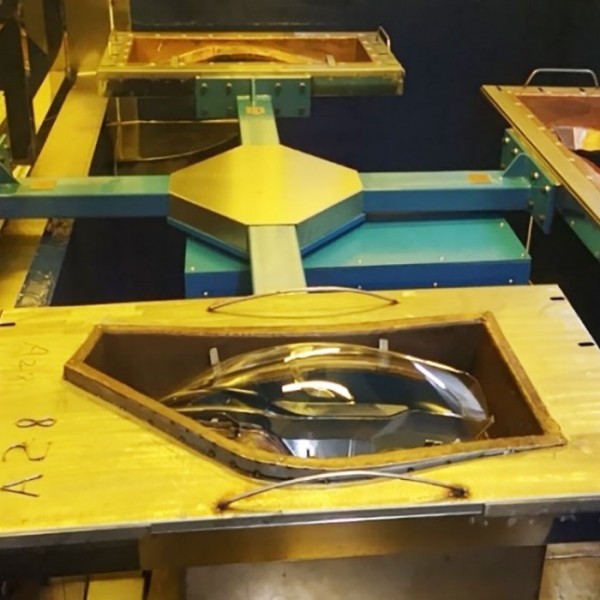
Vibration can also affect coating and curing processes. During coating application, even minor disturbances can lead to uneven film thickness, surface defects, or inconsistencies in finish quality. Similarly, vibration during curing may influence coating uniformity or adhesion. Isolating coating stations from external vibration sources and using stable conveyor systems helps maintain consistent surface quality. Testing and inspection systems are equally sensitive to vibration. Photometric testing, for example, requires precise measurement of light intensity and beam patterns. Any movement during testing can distort results and lead to incorrect evaluations. Equipment used for optical measurement must be installed on vibration-isolated platforms to ensure accurate and repeatable data.
Another important aspect is the impact of vibration on assembled components during transport within the production line. Conveyors, transfer systems, and handling equipment must be designed to minimize shocks and sudden impacts. Smooth transitions, controlled speeds, and cushioning systems help protect delicate optical components from damage or misalignment before final assembly. Environmental factors within the factory can also contribute to vibration. Nearby heavy machinery, floor conditions, and structural design of the facility can influence vibration levels. Conducting vibration analysis and implementing isolation solutions—such as anti-vibration mounts or dedicated equipment foundations—can significantly improve production stability.
From a product perspective, managing vibration during production contributes to better real-world performance. Automotive lighting systems must withstand continuous vibration during vehicle operation without degradation. By ensuring that components are assembled under stable conditions and properly secured, manufacturers improve the durability and reliability of the final product. Continuous monitoring and data analysis further enhance vibration control. Sensors can detect abnormal vibration levels in equipment, allowing for early intervention before quality issues arise. Predictive maintenance strategies help identify worn components or misalignments that could increase vibration over time.
Ultimately, managing vibration impact in automotive lighting production requires a comprehensive approach that combines equipment design, process control, and environmental management. By minimizing vibration throughout the manufacturing process, companies like Jinway can ensure higher precision, improved product quality, and long-term reliability—meeting the demanding expectations of modern automotive OEMs.